
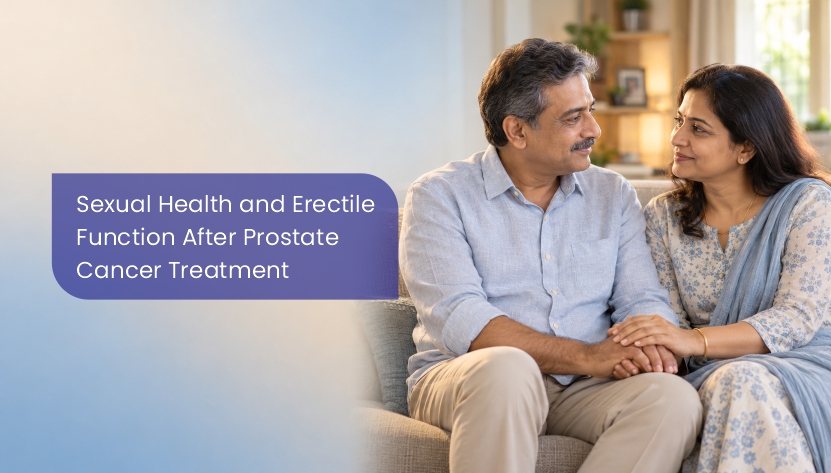
Sexual Health and Erectile Function After Prostate Cancer Treatment
For many men, the first concern after a prostate cancer diagnosis is the effect of treatment on their health. Questions about erections, sexual desire and intimacy are also important, although they may be difficult to raise. Prostate cancer treatments can affect sexual function in different ways. Some changes may improve over time or respond to treatment, while others may persist. This blog explains why these changes happen, factors that influence recovery, and the options that can be discussed with a qualified specialist.
Why Prostate Cancer Treatment Affects Sexual Function
The prostate sits deep in the pelvis, surrounded by delicate nerves and blood vessels that control erections. These are called the neurovascular bundles. Any treatment aimed at the prostate can affect them:
- Radical prostatectomy (surgery): the nerves run right alongside the prostate and can be stretched, bruised or removed during surgery. Even with careful nerve-sparing techniques, they often need months to recover.
- Radiation therapy: erections are often normal at first, but radiation can gradually damage the small blood vessels and nerves, so problems may appear slowly over one to three years.
- Hormone therapy (androgen deprivation therapy): lowering testosterone reduces sexual desire and makes erections harder to achieve, and can also cause fatigue and mood changes.
What Changes Can Men Expect?
Sexual changes after treatment go beyond erections alone. Common changes include:
- Erectile dysfunction: difficulty getting or keeping an erection firm enough for intercourse
- Dry orgasm: after prostatectomy, the prostate and seminal vesicles are removed, so orgasm still happens but without ejaculation
- Reduced semen: after radiation, the amount of ejaculate often decreases
- Climacturia: leakage of urine at orgasm, which can occur after surgery and may improve with time
- Changes in penile length: some men notice slight shortening after surgery
- Lower libido: especially with hormone therapy, but also due to stress, fatigue or anxiety
Orgasm and erection involve different physiological processes. Some men can still experience orgasm despite difficulty with erections, although experiences vary.
What Affects Recovery?
Recovery varies widely from man to man. The main factors include:
- Erectile function before treatment: men with good erections beforehand tend to recover better
- Age: younger age may be associated with better recovery, although outcomes vary
- Nerve-sparing surgery: whether one or both nerve bundles could be safely preserved, which depends on the cancer's location and extent
- Other health conditions: diabetes, high blood pressure, cardiovascular disease, obesity and smoking may affect erectile function and recovery
- Type and combination of treatments: for example, radiation combined with hormone therapy
After nerve-sparing surgery, erectile function may improve over 12 to 24 months or longer, but recovery is variable and may be incomplete. Pre-treatment function, disease-related surgical limitations and other health conditions all influence outcomes.
Penile Rehabilitation: Starting Early
Penile rehabilitation refers to selected treatments used after prostate cancer therapy to support erectile function or sexual activity during recovery. Options may include medicines or vacuum devices. Although some treatments can help achieve erections, evidence that early rehabilitation reliably restores spontaneous erectile function is mixed. The timing and suitability of any programme should be discussed with the treating urologist.
Treatment Options for Erectile Dysfunction
Several management options are available for erectile dysfunction after prostate cancer treatment. Their suitability, benefits and possible adverse effects depend on individual circumstances:
- Oral medicines (PDE5 inhibitors): medicines such as sildenafil or tadalafil can support erections in some patients; their effectiveness depends partly on remaining nerve and vascular function
- Vacuum erection devices: a cylinder and pump help draw blood into the penis, sometimes with a constriction ring to maintain an erection; they may be considered for sexual activity or rehabilitation
- Penile injections: medicines such as alprostadil may produce an erection in some men when prescribed and administered with appropriate medical instruction
- Urethral medication: an alprostadil preparation placed into the urethra may be an option for selected patients; availability and suitability vary
- Penile implant (prosthesis): an inflatable or malleable device placed surgically may be considered when other options are unsuitable or unsuccessful. Potential benefits, complications and expectations require specialist discussion
Oral medicines should always be discussed with a doctor, particularly for men taking nitrates for heart conditions, as the combination can be dangerous.
Managing Other Sexual Changes
Pelvic floor exercises, ideally guided by a qualified physiotherapist, may help with urinary control and climacturia. Practical measures may also be discussed with a clinician. For low desire associated with hormone therapy, exercise, counselling and review of treatment-related effects may be helpful. Changes to cancer treatment should only be considered by the treating oncology team.
The Emotional Side and Your Partner
Sexual changes can affect confidence, mood and relationships. Many men feel a sense of loss or worry about disappointing their partner. Partners, meanwhile, may be unsure how to raise the topic. Talking openly, involving your partner in appointments and redefining intimacy beyond intercourse can make a real difference. Sexual health counselling or support groups are valuable and are not a sign of weakness.
Discuss It Before Treatment Begins
Sexual health concerns are worth discussing before prostate cancer treatment begins. Understanding possible effects can support shared decision-making about surgery, radiation or, for selected low-risk disease, active surveillance. It may also help patients plan appropriate follow-up and supportive care.
Conclusion
Sexual changes after prostate cancer treatment are common and can affect quality of life and relationships. Management may include medication, devices, counselling or other interventions, but improvement is not guaranteed and some effects can be long-lasting. Discussing concerns with the treating team can help identify suitable options and set realistic expectations.
Contact Us
The Gujarat Uro Oncology Associates team offers expert consultation, diagnosis, second opinions, and treatment planning for urological cancers. To learn more or book an appointment, contact 91 75730 04253 or email bakshihemang@yahoo.co.in.